So this was nowhere in my plans for today, but I noticed on the TpT site that there is a section for teachers to request products that they're willing to purchase if created. One teacher posted that she'd like a form/template for students to complete as they read their Social Studies textbook. Now, although that sounds dreadfully boring to me, I can see that it could be useful at times since students are supposed to be reading more nonfiction and since they need to become good at doing so independently. Also, reading huge chunks of nonfiction like entire sections or chapters can be overwhelming and leave you with a "what did I just read?" feeling. I figured that it'd be easy to fulfill her request and maybe even make some money off of this idea, so I made a form for her students to (hopefully) use. I really like the form I made. Even if the teacher doesn't purchase it I'm confident that I'll use it in my own class and change it according to what we're reading. Here's why: I made space for learning about new people, terms, and places using context clues, left space for applying that new word knowledge via drawing or writing/summarizing, I created space for students to preview their chapters and turn headings into questions (thus setting a purpose for reading), and I included areas for recording answers to their questions and reflecting. Yeah, I impressed myself! I sure hope that someone finds this useful! (and not just me) :) If you're interested in viewing this product, here's the link. I have to admit that the preview thumbnails stink since I had to take photos on my phone of the computer screen, but I think that the overall finished product is a great and useful one!
Oh, and I noticed a request for a daily vocabulary PowerPoint...as in over 180 slides of vocab words with definitions, sentences, and illustrations. I may or may not have emailed these teachers saying that I'd be happy to help. We will see what comes of that!
Tuesday, June 26, 2012

Some real progress! Auto/Biography Menus!
I'm not really sure what got into me a little while ago, but I went on a menu making rampage! I suppose it all started when I was thinking about reading the autobiography of Ruby Bridges with the kiddos. I'm really excited about it! As I was flipping through the pages of the autobiography I fell in LOVE with many of the photographs, and especially an insert of writing about Ruby Bridges from her teacher Mrs. Henry...so sweet! So, in thinking about reading this book and all that it will entail...teaching background knowledge, certain vocab words, nonfiction text features....I decided to make a menu, or choice board, to be completed during and after reading the autobiography. It's designed to be completed tic-tac-toe style, and students HAVE to go through the middle. Of course that's my sneaky way of making sure that they all complete a very important little project ;) Once I started designing the board and creating the template/instructions for each activity it occurred to me that it could also be used during and after reading a biography, so I created a copy that was edited to include the term "biography." Both of these choice boards and the accompanying instructions/templates have been added to my Teachers Pay Teachers store and include the following little intro...
This choice board, or menu, contains nine engaging activities for students to complete during and after reading a biography. The document contains the choice board and a template/instruction sheet for each activity described. Students will have the opportunity to write a biopoem, create a text features mini-book, write a book review using a template, design a new cover for the biography, create a Bloom's Taxonomy based "quiz" with an answer key, design a memorial to honor the book's subject, and more! This board allows students to reflect and think critically while completing activities which engage them in writing, illustrating, and creating!
The activities that aren't mentionedbecause I couldn't remember them at the time are: writing a letter to the subject of the book, creating a character bag with 10 items that represent the character and important events in some way, and rewriting a portion of the book in an opposite point of view. That should be fun, right?? I plan to share this with my fellow Reading teachers and to use it with my classes when we read "Through My Eyes" by Ruby Bridges. I'm excited!!
This choice board, or menu, contains nine engaging activities for students to complete during and after reading a biography. The document contains the choice board and a template/instruction sheet for each activity described. Students will have the opportunity to write a biopoem, create a text features mini-book, write a book review using a template, design a new cover for the biography, create a Bloom's Taxonomy based "quiz" with an answer key, design a memorial to honor the book's subject, and more! This board allows students to reflect and think critically while completing activities which engage them in writing, illustrating, and creating!
The activities that aren't mentioned
Monday, June 25, 2012
Update on "My Dog Skip"...
I read about half of "My Dog Skip" yesterday and found that although it's a super cute and pull-on-your-heartstrings-if-you're-a-dog-owner story, it's probably a bit much for fifth graders. The vocab would be very challenging for fifth graders to take in... As in vocab overload! It's probably a step or two above the vocabulary level of "Tuck Everlasting," which is pretty challenging. Also, the memoir capture hundreds of memories with Skip, so I'm thinking that it would make a fun read aloud for periods of anywhere from 3-10 minutes when transitioning or when we just need a break and a laugh. I'm going to finish it, but I remain on the hunt for another nonfiction book to read as an entire class and to base a unit on.
Friday, June 22, 2012
Back to the Essentials...
Confession: Though I started out teaching at a school with no official reading basal and never even saw a teacher's manual until I started teaching in Nashville, I've become kind of dependent upon them...
Now I'm not saying that I couldn't teach without a basal/teacher's edition, but I am saying that I've found them valuable in mapping out the curriculum. Truth be told, the publishers have done a decent job presenting content and skills in a manageable and pretty interesting format. I have taken advantage of this. But let me be clear; I have plenty of my own ideas. I'm completely comfortable straying from the norm to do my own thing whether it's teaching my Go Figure! Figurative Language unit, reading Tuck Everlasting for a few weeks, completing my always fun Pumpkin Character projects, or whatever I feel I need to do to teach "my stuff."
So, this year I've decided (kind of...it's also kind of mandated though no one will actually check to see if I'm doing this....) to stray a bit from the basal and incorporate much more Essential Literature into our Reading class. As we transition to Common Core we know that we are supposed to increase the amount of nonfiction read by students and focus on text complexity Our goal is to help students to understand texts that are more complex than traditional grade level texts. In my classes we read LOTS of nonfiction! We read nonfiction articles and stories in the basal in addition to lots of nonfiction writing in the Social Studies textbook and trade books. I'm not worried too much about that. I enjoy reading nonfiction and teaching from it. I suppose that I will have to work at finding texts with a higher level of text complexity to read as an entire class.
Our school year is divided into four quarters. They're each about nine weeks long. My plan is to complete some of the mini units from our basal for about half of the nine weeks and then to spend the rest of the quarter reading from one of the Essential Literature books. As I choose these books I want to keep the whole text complexity thing in mind and choose books from different genres. Here are the books that I'm strongly considering:
 Tuck Everlasting by Natalie Babbit: Okay, so I read this book with the kids every year, and every year they LOVE it! Not only does this book present many teachable moments for literary concepts like figurative language, imagery, plot, imagery, theme, and MUCH more, but it contains all that middle schoolers need to stay in a book. There's mystery, a bit of romance, adventure, suspense, and the fascinating idea of rebellion by a kid. It's fantastic, and I can't wait to read it again with a new group of kiddos!

Number the Stars by Lois Lowry: This book is definitely a children's classic. I've always loved this book, but I've never made the time to teach it. Besides the obvious historical value (it goes perfectly with teaching a bit about World War II in Social Studies), it also contains the elements of adventure, suspense, and drama.

My Dog Skip by Willie Morris: I've never read this book before, but just reading through the e-book on Google books makes me excited! I noticed it on our county's Essential Literature list and that it was marked as a non-fiction text. What?! I had no idea that it's actually a nonfiction memoir written by Mr. Morris recounting his childhood with his dog. This is a definitely possibility, and it sounds funny and heartwarming! It's also marked in the "advanced" category, but I think I'll read it for myself and figure out a way to make it happen.

Through My Eyes by Ruby Bridges: In my quest to expose students to many genres I would like to read through at least one biography with them. In the book Ruby Bridges recounts the story of her involvement, as a six-year-old, in the integration of her school in New Orleans in 1960. This book would be a great addition to our study of the Civil Rights Movement in our country! I think that the students would benefit from hearing (reading) from someone directly involved in the Civil Rights Movement and that the book would provide many opportunities to sharpen reading skills while learning history.
Another idea... I am interested in completing some sort of "presidential" or "election" unit since this is an election year. I suppose we could read the biographies of different presidents and extend that to not only sharing what's learned about them, but deciding who was a good leader and why, who wasn't and why, what makes a good president, and who should be our next president. We shall see....
So, I am excited to begin this journey through more Essential Literature! I suppose that one of my next tasks is to go through the basal and decide which weekly units will be cut and which shall remain. Until I decide, I'll be rereading these books and brainstorming!
Now I'm not saying that I couldn't teach without a basal/teacher's edition, but I am saying that I've found them valuable in mapping out the curriculum. Truth be told, the publishers have done a decent job presenting content and skills in a manageable and pretty interesting format. I have taken advantage of this. But let me be clear; I have plenty of my own ideas. I'm completely comfortable straying from the norm to do my own thing whether it's teaching my Go Figure! Figurative Language unit, reading Tuck Everlasting for a few weeks, completing my always fun Pumpkin Character projects, or whatever I feel I need to do to teach "my stuff."
So, this year I've decided (kind of...it's also kind of mandated though no one will actually check to see if I'm doing this....) to stray a bit from the basal and incorporate much more Essential Literature into our Reading class. As we transition to Common Core we know that we are supposed to increase the amount of nonfiction read by students and focus on text complexity Our goal is to help students to understand texts that are more complex than traditional grade level texts. In my classes we read LOTS of nonfiction! We read nonfiction articles and stories in the basal in addition to lots of nonfiction writing in the Social Studies textbook and trade books. I'm not worried too much about that. I enjoy reading nonfiction and teaching from it. I suppose that I will have to work at finding texts with a higher level of text complexity to read as an entire class.
Our school year is divided into four quarters. They're each about nine weeks long. My plan is to complete some of the mini units from our basal for about half of the nine weeks and then to spend the rest of the quarter reading from one of the Essential Literature books. As I choose these books I want to keep the whole text complexity thing in mind and choose books from different genres. Here are the books that I'm strongly considering:
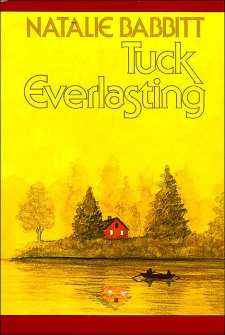 Tuck Everlasting by Natalie Babbit: Okay, so I read this book with the kids every year, and every year they LOVE it! Not only does this book present many teachable moments for literary concepts like figurative language, imagery, plot, imagery, theme, and MUCH more, but it contains all that middle schoolers need to stay in a book. There's mystery, a bit of romance, adventure, suspense, and the fascinating idea of rebellion by a kid. It's fantastic, and I can't wait to read it again with a new group of kiddos!
Number the Stars by Lois Lowry: This book is definitely a children's classic. I've always loved this book, but I've never made the time to teach it. Besides the obvious historical value (it goes perfectly with teaching a bit about World War II in Social Studies), it also contains the elements of adventure, suspense, and drama.
My Dog Skip by Willie Morris: I've never read this book before, but just reading through the e-book on Google books makes me excited! I noticed it on our county's Essential Literature list and that it was marked as a non-fiction text. What?! I had no idea that it's actually a nonfiction memoir written by Mr. Morris recounting his childhood with his dog. This is a definitely possibility, and it sounds funny and heartwarming! It's also marked in the "advanced" category, but I think I'll read it for myself and figure out a way to make it happen.
Through My Eyes by Ruby Bridges: In my quest to expose students to many genres I would like to read through at least one biography with them. In the book Ruby Bridges recounts the story of her involvement, as a six-year-old, in the integration of her school in New Orleans in 1960. This book would be a great addition to our study of the Civil Rights Movement in our country! I think that the students would benefit from hearing (reading) from someone directly involved in the Civil Rights Movement and that the book would provide many opportunities to sharpen reading skills while learning history.
So, I am excited to begin this journey through more Essential Literature! I suppose that one of my next tasks is to go through the basal and decide which weekly units will be cut and which shall remain. Until I decide, I'll be rereading these books and brainstorming!
Tuesday, June 19, 2012
Interactive Notebooks...a little research & browsing...
Before I jump into having my students create and maintain interactive notebooks in Reading and Social Studies, I'm taking a look at how other teachers have used interactive notebooks and how they're set up and maintained. I've seen some great examples and ideas so far!
I was first inspired by the interactive notebooks of Ms. Mohammed. I discovered her blog while googling for interactive notebooks a few weeks ago. They're fantastic! Not only are they organized, but they include excellent, creative, and colorful graphic organizers and activities that contain tons of essential information. I also appreciate that her notebooks contain a Table of Contents, a Classroom Expectations Page, a "Facebook page" to give information about the notebook's author, and many awesomely creative ways for students to demonstrate their knowledge and thinking. I have a feeling that I'll be referring to her blog A LOT!


Somewhere along the way I stumbled across a link to a PDF with TONS of great ideas for organizing an interactive notebook! I'm pretty sure that this document will be within arms reach this year! I am still pondering (in a good way) the traditional right side (input) -left side (output) uses of pages, and I LOVE many other ideas presented! This document points out that interactive notebooks are engaging for students because they allow students to use linguistic and visual intelligences, make notetaking an active process, allow students to organize information as the learn, and they become a personalized portfolio of each student's learning. This document also suggests including a Table of Contents, a place for students to record expectations for the notebook, and an author's page. I also adore the idea of gluing a manilla envelope inside the back cover of the notebooks for "small parts" that need to be kept in a safe place. I'm not sure yet how I will grade these. I remember keeping an organized notebook in middle school and then turning in my notebook for a "notebook check" which was worth a large portion of my grade. I'll have to ponder this for a while longer...
The activity ideas offered in the PDF are outstanding! The creative opportunities for students to "output" what they've learned are endless! Here are a few examples taken from the document...


Okay, and I found one more outstanding blog from Kalamity Kat about using interactive notebooks. I found this blog very insightful because it offers her reflection on using these for the first time ever in her class and some VERY helpful tips that I wouldn't have thought of. Here's what I took away from her blog: a pocket can be made one the inside of the front and back covers with cardstock or construction paper, markers should NOT be used in these notebooks because of bleeding, and don't write on the back of pages or on the next page when space is running out- add a new sheet that folds up/down/out using tape (staples cause rips). Very helpful, don't you agree?

So...I did a lot of writing and browsing around to find out more about interactive notebooks. This post is mainly to think through all that I've seen and read, and I like what I've seen and read. I have to say that I am pumped about creating and using interactive notebooks in Reading and Social Studies now! Even during my sleep late, sip coffee slowly, watch the Today Show, take long morning walks with my puppy summer!....and that's quite remarkable! ;)
I was first inspired by the interactive notebooks of Ms. Mohammed. I discovered her blog while googling for interactive notebooks a few weeks ago. They're fantastic! Not only are they organized, but they include excellent, creative, and colorful graphic organizers and activities that contain tons of essential information. I also appreciate that her notebooks contain a Table of Contents, a Classroom Expectations Page, a "Facebook page" to give information about the notebook's author, and many awesomely creative ways for students to demonstrate their knowledge and thinking. I have a feeling that I'll be referring to her blog A LOT!
Somewhere along the way I stumbled across a link to a PDF with TONS of great ideas for organizing an interactive notebook! I'm pretty sure that this document will be within arms reach this year! I am still pondering (in a good way) the traditional right side (input) -left side (output) uses of pages, and I LOVE many other ideas presented! This document points out that interactive notebooks are engaging for students because they allow students to use linguistic and visual intelligences, make notetaking an active process, allow students to organize information as the learn, and they become a personalized portfolio of each student's learning. This document also suggests including a Table of Contents, a place for students to record expectations for the notebook, and an author's page. I also adore the idea of gluing a manilla envelope inside the back cover of the notebooks for "small parts" that need to be kept in a safe place. I'm not sure yet how I will grade these. I remember keeping an organized notebook in middle school and then turning in my notebook for a "notebook check" which was worth a large portion of my grade. I'll have to ponder this for a while longer...
The activity ideas offered in the PDF are outstanding! The creative opportunities for students to "output" what they've learned are endless! Here are a few examples taken from the document...
- Forms of Poetry – write various forms of poetry to describe a person, place, event, or feeling of a
moment. - Historical Journals – assume the role of a historical figure to keep a journal that recounts the
figure’s feelings and experiences in language of the era. - Illustrated Dictionary Entries – explain key terms by created illustrated dictionary entries. Write a
definition, provide a synonym and an antonym, and draw an illustration to represent each term. - Illustrated Timelines – create illustrated timelines to sequence a series of events in chronological
order. - Invitations – design invitations that highlight the main goals and key facts of important historical
events.
Okay, and I found one more outstanding blog from Kalamity Kat about using interactive notebooks. I found this blog very insightful because it offers her reflection on using these for the first time ever in her class and some VERY helpful tips that I wouldn't have thought of. Here's what I took away from her blog: a pocket can be made one the inside of the front and back covers with cardstock or construction paper, markers should NOT be used in these notebooks because of bleeding, and don't write on the back of pages or on the next page when space is running out- add a new sheet that folds up/down/out using tape (staples cause rips). Very helpful, don't you agree?
So...I did a lot of writing and browsing around to find out more about interactive notebooks. This post is mainly to think through all that I've seen and read, and I like what I've seen and read. I have to say that I am pumped about creating and using interactive notebooks in Reading and Social Studies now! Even during my sleep late, sip coffee slowly, watch the Today Show, take long morning walks with my puppy summer!....and that's quite remarkable! ;)
Monday, June 18, 2012
Back in the Saddle!
Well it certainly didn't take me long to fall off of the blogging wagon! I'm back... hopefully for good! I want to continue to use this blog as a place for updates and personal reflections. The past school year (2011-2012) can be considered a challenging success. Though it was challenging (very, very challenging at times), I feel that I improved my strategies and helped students become better readers and writers. I suppose that the evidence would be my own observations of the kids' abilities, knowledge, and work. There was much evidence of improvement and growth. For the most part, test scores also support this. I do, however, have tons and tons of room for improvement, and I'm already thinking of how to make things better next year. I want more growth- personally and for my kids!
Here are a few changes/improvements that I have in mind:
Interactive student notebooks: I've seen some awesome examples of these online. The idea is to give students a notebook that isn't just full of paper that they can tear out and write on. Instead, their notebook (a composition book)becomes a working reference source, a place for documenting successes, questions, and growth. This notebook will be structured. I will determine what is included, and I will help students maintain a Table of Contents that they can refer to. The notebooks will include personal mini/anchor charts, reflections, notes, mini-projects, assignments, and hopefully many interactive foldables related to our lessons. I hope to post much more about these as they're completed!
More Essential Literature! Fiction and Nonfiction! Not only is the Common Core initiative pushing us in this direction, but I believe that kids deserve to be exposed to this real and awesome literature! I plan to read at least one major piece of authentic literature per quarter. Each quarter may begin with a few chosen units from our basal (3-5 weeks) and then conclude with a 3-5 week unit based on a piece of nonfiction or fiction literature. I don't want to abandon the basal completely since I do think it lays out the essential curriculum in a decent and useful format, but I do want students to experience more authentic literature and the complexities/challenges that accompany it.
Classroom Layout and Organization! I have to admit that my classroom last year was very functional, but it wasn't very "cute" or "comfy". In fact, it wasn't really a reflection of my own style at all. I intend to keep all of the functional elements (group lanterns, anchor charts, etc.), but I want my classroom to be nicely and cutely decorated and organized. It will hopefully be student friendly, functional, and welcoming. I intend to do this by using a cute black & white template that I found to create many classroom signs, posters, and labels. I love to use bright colors, so I will also do that with my neon reading baskets, ceiling lanterns & pom poms, and much more! More to come on this!
Now, having considered these changes. There are many things I did this year that I want to continue. I had a great success with the following things:
Anchor Charts! I was introduced to this concept last summer at a Literacy workshop. I LOVE the idea of student/teacher created posters that are a work in progress. This year I had anchor charts for literary genres, reading strategies, prefixes and suffixes, homophones and homographs, summarizing, point of view, our "Top 10 List for Narrative Writing," and story elements. These charts were written on neon chart paper and added to throughout the year as we created our own examples and recorded our own notes on the posters. I saw students reference them countless times when reading and working. They provided awesome reminders, reviews, and were great references! I will definitely use these again and add a few more.
Using Academic Language and Think Alouds! This year I made it my goal to use as much academic language as possible in conversation with the kids. I think that it made a huge difference. In the past I had a habit of dumbing down some "teacherese" to make my speech "kid friendly." This year I did not do that. I did not fear words such as inferences, evaluate, and homograph. It was fun, and the kids felt like super geniuses each time that they could understand and use the words correctly themselves. I also made a point to "think aloud" WAY MORE during reading, problem solving, writing, and during any especially during activities which required critical thinking. I found that it made a huge difference for students to actually hear me think about how and why I should or should not do something. I could almost see lightbulbs turning on in their heads as I "thought/talked" my way through many difficult questions. I think that it also demonstrated a great deal of logic to them, which I hope rubbed off! :)
Teaching Weekly Prefixes and Suffixes! This was probably the biggest new commitment that I made this year. Using a book that I purchased last summer, I introduced students to 1-3 new prefixes or suffixes each week and eight words including those suffixes. Each week we spent time recording those new words and meanings, completing word sorts, playing "I Have, Who Has?" using the words, applying the word part knowledge in our writing and reading, and taking a quiz over them on Fridays. This proved to be invaluable! this knowledge did translate to other words with the same prefix/suffix as we read and as we began to notice that words with the prefixes/suffixes we studied are all around us! They pointed these words out to me daily in speech and in reading! It became easy for my students to see that new and "long" words don't have to be painful! They can be broken down and easily decoded. I loved Word Study this year!
Writers' Workshop featuring "Top 10 Tips for Narrative Writing"! This year in the weeks leading up to the TCAP Writing Assessment I conducted Writers' Workshops on Fridays. This workshop featured a mini-lesson focusing on one writing/narrative writing skill or strategy and a time for writing and focusing on implementing the new skill/strategy. Each mini-lesson title made it onto our Narrative Writing anchor chart. (Ex: Have an attention grabbing introduction! Hook your readers by...) This chart was referenced daily by all (including me!) and proved to be very helpful for my little writers! Providing them with one "tip" per week and allowing them to implement these tips one by one over the course of at least twelve weeks was awesome! The writing of my students improved A LOT during these workshops, and their improved writing showed up on the writing assessment and in many future assignments and projects across the curriculum. Success! ;)
Probably more importantly are some things that need to be focused on each and every day at school and at home. They are...
Hopefully I'll be blogging about my progress (and failures!) as the summer continues and the school year begins. :)
Here are a few changes/improvements that I have in mind:
Interactive student notebooks: I've seen some awesome examples of these online. The idea is to give students a notebook that isn't just full of paper that they can tear out and write on. Instead, their notebook (a composition book)becomes a working reference source, a place for documenting successes, questions, and growth. This notebook will be structured. I will determine what is included, and I will help students maintain a Table of Contents that they can refer to. The notebooks will include personal mini/anchor charts, reflections, notes, mini-projects, assignments, and hopefully many interactive foldables related to our lessons. I hope to post much more about these as they're completed!
More Essential Literature! Fiction and Nonfiction! Not only is the Common Core initiative pushing us in this direction, but I believe that kids deserve to be exposed to this real and awesome literature! I plan to read at least one major piece of authentic literature per quarter. Each quarter may begin with a few chosen units from our basal (3-5 weeks) and then conclude with a 3-5 week unit based on a piece of nonfiction or fiction literature. I don't want to abandon the basal completely since I do think it lays out the essential curriculum in a decent and useful format, but I do want students to experience more authentic literature and the complexities/challenges that accompany it.
Classroom Layout and Organization! I have to admit that my classroom last year was very functional, but it wasn't very "cute" or "comfy". In fact, it wasn't really a reflection of my own style at all. I intend to keep all of the functional elements (group lanterns, anchor charts, etc.), but I want my classroom to be nicely and cutely decorated and organized. It will hopefully be student friendly, functional, and welcoming. I intend to do this by using a cute black & white template that I found to create many classroom signs, posters, and labels. I love to use bright colors, so I will also do that with my neon reading baskets, ceiling lanterns & pom poms, and much more! More to come on this!
Now, having considered these changes. There are many things I did this year that I want to continue. I had a great success with the following things:
Anchor Charts! I was introduced to this concept last summer at a Literacy workshop. I LOVE the idea of student/teacher created posters that are a work in progress. This year I had anchor charts for literary genres, reading strategies, prefixes and suffixes, homophones and homographs, summarizing, point of view, our "Top 10 List for Narrative Writing," and story elements. These charts were written on neon chart paper and added to throughout the year as we created our own examples and recorded our own notes on the posters. I saw students reference them countless times when reading and working. They provided awesome reminders, reviews, and were great references! I will definitely use these again and add a few more.
Using Academic Language and Think Alouds! This year I made it my goal to use as much academic language as possible in conversation with the kids. I think that it made a huge difference. In the past I had a habit of dumbing down some "teacherese" to make my speech "kid friendly." This year I did not do that. I did not fear words such as inferences, evaluate, and homograph. It was fun, and the kids felt like super geniuses each time that they could understand and use the words correctly themselves. I also made a point to "think aloud" WAY MORE during reading, problem solving, writing, and during any especially during activities which required critical thinking. I found that it made a huge difference for students to actually hear me think about how and why I should or should not do something. I could almost see lightbulbs turning on in their heads as I "thought/talked" my way through many difficult questions. I think that it also demonstrated a great deal of logic to them, which I hope rubbed off! :)
Teaching Weekly Prefixes and Suffixes! This was probably the biggest new commitment that I made this year. Using a book that I purchased last summer, I introduced students to 1-3 new prefixes or suffixes each week and eight words including those suffixes. Each week we spent time recording those new words and meanings, completing word sorts, playing "I Have, Who Has?" using the words, applying the word part knowledge in our writing and reading, and taking a quiz over them on Fridays. This proved to be invaluable! this knowledge did translate to other words with the same prefix/suffix as we read and as we began to notice that words with the prefixes/suffixes we studied are all around us! They pointed these words out to me daily in speech and in reading! It became easy for my students to see that new and "long" words don't have to be painful! They can be broken down and easily decoded. I loved Word Study this year!
Writers' Workshop featuring "Top 10 Tips for Narrative Writing"! This year in the weeks leading up to the TCAP Writing Assessment I conducted Writers' Workshops on Fridays. This workshop featured a mini-lesson focusing on one writing/narrative writing skill or strategy and a time for writing and focusing on implementing the new skill/strategy. Each mini-lesson title made it onto our Narrative Writing anchor chart. (Ex: Have an attention grabbing introduction! Hook your readers by...) This chart was referenced daily by all (including me!) and proved to be very helpful for my little writers! Providing them with one "tip" per week and allowing them to implement these tips one by one over the course of at least twelve weeks was awesome! The writing of my students improved A LOT during these workshops, and their improved writing showed up on the writing assessment and in many future assignments and projects across the curriculum. Success! ;)
Probably more importantly are some things that need to be focused on each and every day at school and at home. They are...
- Focus only on what you can control.
- Be present! (not just physically, but mentally!)
- Focus on relationships.
Hopefully I'll be blogging about my progress (and failures!) as the summer continues and the school year begins. :)
Subscribe to:
Comments (Atom)